
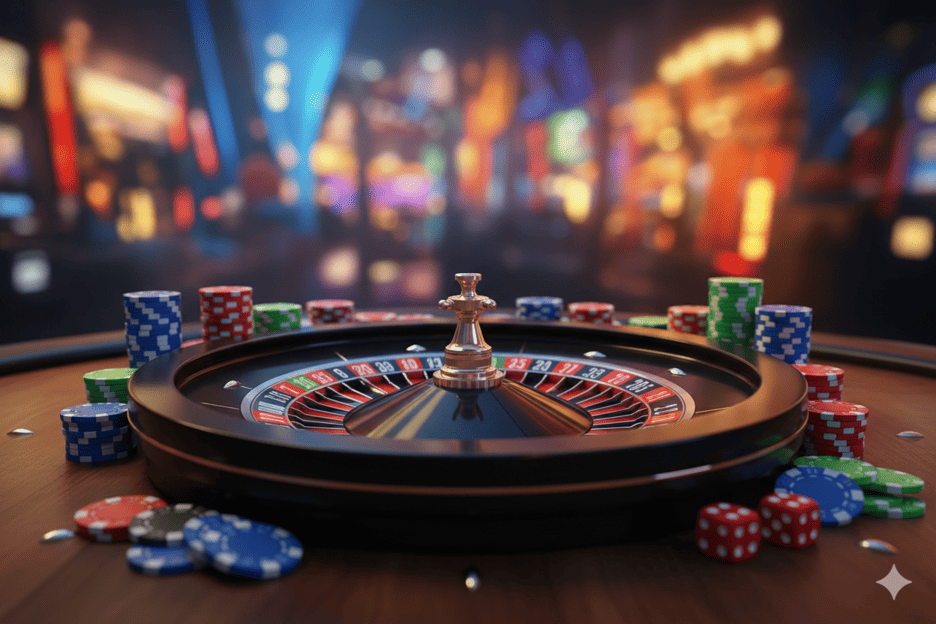
I have spent my entire adult life analyzing the trajectory of a ball. Whether it is the ivory pill bouncing around a roulette wheel or the erratic tumble of dice on a craps table, my career has been defined by the monetization of physics and chance. For decades, the casino industry operated on a singular, immutable premise. The player pays for the thrill of the unknown. You press a button, you wait, and the universe decides your fate. It was a passive contract. But recently, sitting in our data centers watching the demographics shift, I have realized that this contract is expiring. The generation coming up, the ones raised on Fortnite, League of Legends, and high-frequency stimulus, are not interested in watching a wheel spin. They demand agency. They demand control. They want to know that their hand-eye coordination or their intellect influenced the outcome. This demand is driving the single most disruptive trend in our sector: the aggressive development of skill-based live games.
This is not a subtle pivot. It is an existential overhaul of what a casino is. We are moving from an era of “Hope” to an era of “Competence.” In this article, I am going to take you deep into our R&D labs. I will explain the mathematics of how we allow you to use skill while ensuring the house stays in business. I will discuss the technological hurdles of latency and the psychological power of the “near miss” when it is your fault, not the machine’s. We are building a new world where the line between a video game and a casino table is not just blurred. It is erased.
The Death of the Passive Player
To understand why we are pivoting to skill, you have to look at the engagement metrics of a standard slot machine. For a 50-year-old, a slot machine is a relaxing escape. For a 25-year-old, it is a boredom engine. They look at the spinning reels and think, “I have no input here. I am just a wallet attached to a random number generator.”
Video games have conditioned the modern brain to expect a correlation between input and output. If I aim better, I get the headshot. If I drive better, I win the race. Traditional gambling denies this correlation.
Skill-based live games restore it. We are creating environments where your decision-making speed, your memory, or your tactical choices directly impact your Return to Player (RTP). This does not mean we are letting you rob us. It means we are creating a “Performance Band.”
The Concept of the RTP Band
In a slot machine, the RTP is fixed. Let us say it is 96 percent. No matter who plays, the math is the same.
In a skill-based game, the RTP is dynamic.
- The Novice: Someone who plays poorly, misses targets, or makes bad logic choices might have an RTP of 92 percent.
- The Expert: A player with lightning reflexes and perfect strategy might achieve an RTP of 98.5 percent.
The “Gap” between 92 percent and 98.5 percent is where the excitement lives. It compels the player to improve. It turns gambling into a discipline. You are not just betting money; you are betting on your own ability to perform. This is infinitely more sticky than betting on luck.
Redefining “Skill” in a Casino Context
When I say “skill,” I do not necessarily mean poker, which is the original skill game. I am talking about “Arcade-ified” Live Casino experiences.
We are developing games that look like game shows but play like mobile apps. Imagine a live studio with a host. Behind them is a massive digital wall. The game is a collective “Tower Defense” scenario.
Players place a bet to enter the round. Using their mobile phones, they control a cannon on the screen.
Enemies spawn. The players must tap to shoot.
- The Skill Element: Accuracy and speed. If you shoot the gold enemies, you get multipliers. If you miss, you get nothing.
- The Luck Element: The spawn rate and value of the enemies are determined by RNG.
This is “Hybrid Gameplay.” You cannot win if you don’t shoot (Skill), but you cannot win big if the high-value enemies don’t spawn (Luck). This balance keeps the game legal (it is still a game of chance under most jurisdictions) but gives the player the feeling of being the master of their destiny.
The Blackjack Evolution: The Original Skill Game
Blackjack has always been the holy grail of skill gaming. A card counter or a perfect basic strategy player can shave the house edge down to less than 0.5 percent. But Blackjack is slow. It is intimidating.
We are modernizing it. We are introducing “Decision Speed” bonuses.
In these new variants, making the mathematically correct decision (Hit, Stand, Split) is only half the battle. The other half is how fast you make it.
If you make the correct move in under 1 second, you unlock a “Speed Multiplier” for the next hand.
This adds a layer of physical dexterity to a cerebral game. It forces the player into a “Flow State.” You cannot hesitate. You have to internalize the strategy so deeply that it becomes muscle memory. This appeals massively to the gamer demographic who are used to twitch-reactions.
The Technology of Latency: When Milliseconds Cost Money
In a slot machine, latency does not matter. If the reel spins a second later, nobody cares.
In a skill game, latency is the enemy. If you tap “Shoot” and the server registers it 200 milliseconds later, you miss the target. You feel cheated. You quit.
We are overhauling our entire network infrastructure to support this. We are moving to “Edge Computing.” Instead of the game logic running on a server in Malta, it runs on a node 50 miles from your house.
We are using the same netcode technologies as Call of Duty or Counter-Strike. Prediction algorithms. Lag compensation.
The “State Authority” Problem
In a standard video game, if there is lag, the game might “rubber band” you back a few steps. In a casino game involving real money, we cannot rubber band your wallet.
The “Authority” of the game state must be absolute.
We are developing AI that acts as a referee. It analyzes your input timestamps and the server state to determine “Was that a valid hit?”
This requires immense processing power. We are essentially running a high-fidelity video game and a high-frequency trading algorithm simultaneously.
Live Trivia and Knowledge Betting
Not all skill is physical. Some of it is intellectual.
“Live Trivia” is exploding. It is the HQ Trivia model adapted for gambling.
A live host asks a series of 10 questions.
You pay an entry fee (the bet).
If you get a question wrong, you are eliminated (you lose the bet).
If you survive all 10 questions, you split the prize pool.
This is pure knowledge skill. But to make it a “Casino” game, we add the “Lifeline” mechanic.
You are on Question 7. You don’t know the answer.
The interface offers you a “Buy Pass.” For a fee (a new bet), you can skip the question.
This introduces “Risk Management” skill. Is it worth paying $10 to stay in the game for a chance at the $1000 pot, or should I fold?
This transforms a simple quiz into a complex poker-like game of pot odds and expected value.
The Psychology of the “Near Miss” in Skill Games
In a slot machine, a “Near Miss” (two jackpots and a blank) is programmed to make you feel like you almost won. But deep down, you know the RNG just picked a losing number.
In a skill game, a “Near Miss” is “I missed the pixel by one millimeter.”
This is psychologically devastating and incredibly motivating.
“It was my fault. I can do better next time.”
This triggers “Self-Attribution Bias.” When we win, we credit our skill. When we lose, we blame our lack of practice.
This creates a “Mastery Loop.” Players don’t just play to win money; they play to get better. They watch tutorials. They practice in demo mode. They become students of the game.
A player who is studying your game is a player who is retained for years, not days.
Social Competition: Battle Royale Casino
The traditional casino is “Player vs. House.”
The future is “Player vs. Player” (with the House taking a rake).
We are building “Battle Royale” style live games.
Imagine 100 players enter a live arena. It is a crash game (like Aviator) but with manual ejection.
A multiplier rises.
Random obstacles appear that you must dodge (Skill).
If you hit an obstacle, you crash and lose.
If you cash out, you keep your winnings.
The last person standing gets a “Dominator Bonus.”
This introduces social hierarchy. You want to beat the other 99 people. We display leaderboards. We give cosmetic avatars to the top players.
The House sits back, runs the engine, and takes a small percentage of the pool. This is the safest business model for us because our risk is neutralized, but the excitement for the player is maximized because they are competing against humans, not a machine.
The Problem of Bots and Cheating
This is the dark side of skill gaming.
If a game relies on reflexes or accuracy, a computer will always beat a human.
If we launch a “Live Sniper” game where accuracy pays money, hackers will build an “Aimbot” within 24 hours. The Aimbot will have 100% accuracy and drain our bankroll.
We are engaged in an arms race.
We are deploying “Behavioral Biometrics.”
An AI analyzes how you move your mouse or tap your screen.
- A human creates micro-tremors. Their path to the button is curved. They hesitate.
- A bot moves in straight lines. It has perfect timing.
If our AI detects “Bot-like” perfection, we flag the account.
We also use “Captcha Gameplay.” Occasionally, a target will appear that requires a complex, non-linear human decision that acts as a Turing test within the game itself.
“Shoot the object that is NOT a fruit.” A bot looking for color pixels might fail. A human understands the semantic concept.
The Economics of Skill: Who Pays?
In a skill game, the sharks (good players) eat the fish (bad players).
If the sharks win too much, the casino loses money.
If the fish lose too fast, they quit.
We have to balance the ecosystem.
We use “Matchmaking Algorithms” similar to League of Legends.
We group players by skill level.
- Bronze Table: Low skill, low stakes. Simpler mechanics.
- Diamond Table: High skill, high stakes. Harder targets. Faster speeds.
This ensures that a shark cannot farm the novices. They have to play against other sharks.
The RTP is calibrated for each tier.
At the Diamond tier, the base difficulty is harder, so even a great player only achieves a 98% return, ensuring the house edge remains intact.
The Convergence with Esports
We are watching the Esports industry with envy. They have the viewers. We have the monetization.
The inevitable conclusion is the merger.
We are recruiting retired Esports pros to be “Live Dealers” or “Game Hosts.”
Imagine playing a round of Counter-Strike (or a simplified casino version) where your teammate is a famous pro gamer.
You bet on the team’s success. You can also influence the game by donating “Power-ups.”
This is “Interactive Spectator Betting.”
You are not playing the game physically, but your decisions (buying a shield for the player, dropping a health pack) influence the outcome.
Your “Skill” is resource management and strategic support.
This bridges the gap between the twitch-gamer and the older, strategic gambler.
Regulatory Nightmares: Is it Gambling?
This is where my legal team loses sleep.
Gambling regulations are binary. It is either Chance or Skill.
If it is Chance, it is a Casino.
If it is Skill, it is an Arcade/Video Game.
Our hybrid games sit in the middle.
Regulators ask: “Can a player with zero skill win?”
Answer: “Yes, via the RNG elements.”
Regulators ask: “Can a player with perfect skill lose?”
Answer: “Yes, via the RNG elements.”
This puts us in the “Gambling” bucket, which is where we want to be (taxation is clearer, licenses exist).
However, we have to prove that the “Skill Element” is not an illusion. It must have a material impact on the RTP, otherwise, we are deceiving the customer. We spend months generating millions of simulation rounds to prove to auditors that “Input A leads to Result B” consistently.
The “Flow State” Studio Design
The physical design of our studios is changing.
Old studios were quiet libraries with card tables.
New studios are high-energy arenas.
We use strobe lighting. We use heavy bass music.
We need the player to be in a high-arousal state.
When you are playing a skill game, you need adrenaline. You need focus.
The dealer is no longer wearing a tuxedo. They are wearing futuristic gear. They are standing, moving, shouting encouragement.
“Incoming wave! Get ready! Tap tap tap!”
It is a workout. It is an event.
The Personalization of Difficulty
In the future, the game will adapt to you in real-time.
We are testing “Dynamic Difficulty Adjustment” (DDA).
If the AI sees you are losing 10 rounds in a row because your aim is bad, it might subtly enlarge the hitboxes of the targets.
It helps you win a few rounds to keep you engaged.
Conversely, if you are winning too easily, it speeds up the targets.
This is controversial. Is it fair?
As long as the payouts adjust accordingly (Harder targets = More money), it is fair.
It allows us to keep the player in the “Zone of Proximal Development”-not too hard to be frustrating, not too easy to be boring.
Conclusion: The Active Future
The days of the zombie gambler are numbered.
The future belongs to the active participant.
We are building a casino that rewards focus, discipline, and talent.
We are building a casino that feels like a sport.
The skill-based live games sector is currently 5 percent of our revenue. By 2030, I predict it will be 50 percent.
The transition is painful. It requires new tech, new laws, and a new mindset.
But the reward is a generation of players who do not just visit our site to spend money; they visit to prove their worth.
They come to compete. And in the end, the house doesn’t just want your money; we want your passion. Because passion is the only currency that never devalues.