
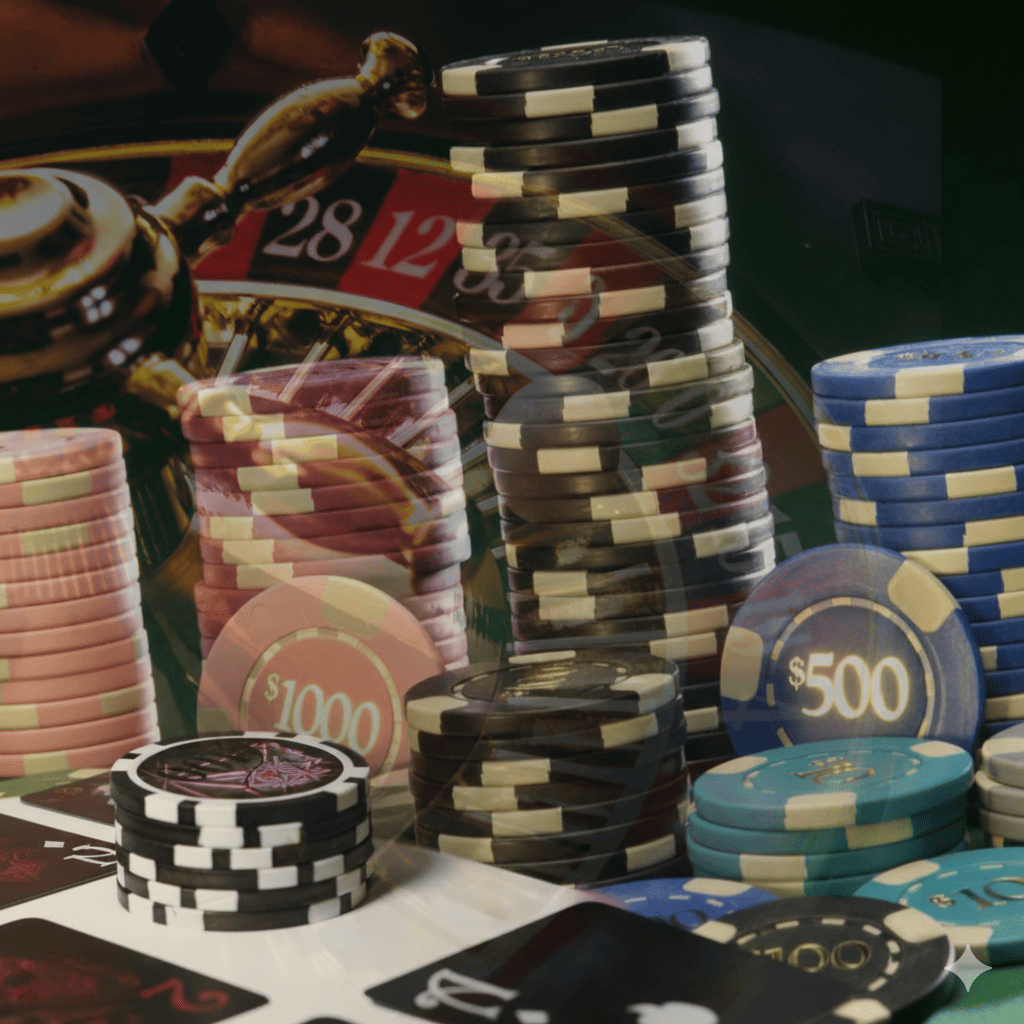
I have stood on the floor of the largest gaming expo in London, watching the eyes of players glaze over as they stare at a single slot machine. It is a hypnotic state, a singular tunnel vision. But recently, I have noticed a different look. It is the look of a stock trader, a pilot, or a conductor. It is the look of rapid-fire processing, where the eyes dart from left to right, managing multiple streams of information instantly. This is the face of the modern gambler. As a representative of a leading online casino, I can tell you that the era of the single-table focus is ending for a specific breed of player. We have engineered a new reality where you no longer have to choose between the hypnotic spin of the wheel and the tactical grit of the card table. We have built the infrastructure for multi-game play live casino experiences, allowing you to engage with up to four live dealer tables simultaneously. This is not just a feature update; it is a fundamental shift in the cognitive architecture of gambling.
In this article, I am going to strip away the marketing gloss and take you into the engine room of this phenomenon. I will explain the massive technological hurdles we overcame to stream multiple 4K videos to your device without melting it. I will dissect the psychology of the “Action Junkie” and why the silence between roulette spins is our biggest enemy. And, perhaps most importantly, I will share the strategies that professional players use to harmonize the disparate rhythms of Roulette and Blackjack into a profitable symphony.
The Death of Downtime: The Psychology of the Split Screen
To understand why we built multi-game capability, you have to understand the concept of “dead air.” In a physical casino, dead air is filled with free drinks, social chatter, and the ambient noise of the floor. Online, dead air is fatal.
The Roulette Gap
Consider the game of Live European Roulette. The dealer announces “No more bets.” The ball spins. It drops. The result is read. The winning chips are paid. The losing chips are swept. The dealer waits for new bets. This cycle takes roughly 45 to 60 seconds. The actual moment of excitement (the ball drop) lasts maybe 5 seconds. That leaves 40 to 50 seconds of waiting. In the digital age, 50 seconds is an eternity. It is enough time for you to check Instagram, answer a text, or worse, close our app.
The Blackjack Solution
Now consider Blackjack. It is faster, punchier, and requires active decisions (Hit, Stand, Double). But it also has pauses while other players make their moves.
By combining these two, we create a “Continuous Dopamine Loop.” You place your bets on the Roulette table. While the wheel is slowly spinning, you shift your focus to the Blackjack table on the right side of your screen to play a hand. By the time the Blackjack hand is resolved, the Roulette ball is dropping. You check the result, re-bet, and switch back to the cards. There is no downtime. There is no boredom. It is a constant stream of engagement. We designed this intentionally to keep the brain in a state of high-alert flow, maximizing what we call “Time on Device.”
The Technical Hydra: Streaming Two Worlds at Once
From a player’s perspective, clicking the “Add Table” button is simple. From an engineering perspective, it is a nightmare.
When you play a single live game, your device is establishing a WebSocket connection for game data (your balance, the card values) and a separate HLS (HTTP Live Streaming) or WebRTC connection for the video. These have to be perfectly synced. If the video lags by two seconds, you see the card before the video shows it, breaking the immersion.
The Bandwidth Bottleneck
Now, imagine doubling or quadrupling that load. We are trying to push two high-definition video streams down the same pipe. If we simply played two 4K streams, your phone would overheat, and your data plan would evaporate in minutes.
To solve this, we use “Adaptive Slicing.” When you enter multi-game mode, we don’t send you the full-resolution master stream for both tables. We dynamically downgrade the resolution of the table you are not actively interacting with.
If your mouse (or finger) is hovering over the Blackjack table, that stream renders in 1080p or 4K. The Roulette table, sitting in the adjacent window, drops to 720p or lower. The moment your cursor moves to the Roulette table, the priority flips instantly. We are juggling pixels in real-time, anticipating your attention to save bandwidth.
The Synchronization Headache
The bigger problem is timing. Roulette and Blackjack happen in different studios, often in different countries. Our Roulette studio might be in Malta, while our Blackjack studio is in Latvia. The data packets have different travel times.
If we didn’t intervene, the timestamp of the events would be chaotic. We use a centralized “Heartbeat Server” that collects the streams from all locations, aligns them to a universal clock, and then bundles them to your device. This ensures that the “live” feeling is consistent across the entire dashboard.
UI/UX Design: The Cockpit Concept
Designing the interface for multi-game play is a lesson in chaos management. A single table is already cluttered with betting grids, chip selectors, history roadmaps, and chat boxes. Putting two of them side-by-side results in visual noise.
We adopted the “Cockpit Philosophy.” In a fighter jet, the pilot has a lot of data, but only the critical data is in the center.
The Collapsible Interface
In our multi-game view, we strip away the non-essentials. The chat box usually disappears or becomes a single unified stream. The history roadmaps for Roulette (the red/black dots) are minimized to a thin strip.
We focus on the “Action Zones.” For Blackjack, the decision buttons (Hit/Stand) become massive and overlay the video feed when it is your turn. For Roulette, the betting racetrack appears only during the betting window. We rely on “Contextual Visibility.” We only show you a button if you can actually use it. This decluttering is vital. Without it, the player would suffer from cognitive overload and make mistakes, leading to frustration and a closed session.
Strategic Harmony: The Rhythm of Risk
Playing two games is not just about playing faster; it is about playing smarter. I have observed professional players who use multi-game play as a hedging strategy, although I must legally state that the house edge remains on every individual table.
The Anchor and The Kite
A common strategy is what I call “The Anchor and The Kite.”
The Anchor is the Roulette table. The player places low-volatility bets, perhaps covering two-thirds of the table or betting on Red/Black. This provides a slow, steady rhythm with a high probability of small returns or small losses. It keeps the balance ticking over.
The Kite is the Blackjack table. This is where the player takes risks. They use the winnings (or the stability) from the Roulette table to fund aggressive plays, side bets, or splitting hands in Blackjack. The slow game grounds the session, while the fast game provides the variance.
Variance Smoothing
Mathematically, playing more hands/spins per hour reduces variance in the short term (Law of Large Numbers), assuming a flat betting structure. However, it also exposes the bankroll to the house edge faster. Smart multi-tablers understand this. They often lower their unit stake. If they usually bet $10 per hand on a single table, they might bet $5 on Blackjack and $5 on Roulette. This maintains their total exposure but spreads the risk across two different mechanical outcomes (cards vs. physics).
The Mobile Frontier: Splitting the Small Screen
Desktop is easy. You have a 27-inch monitor. You can fit four tables comfortably. The real challenge, and our current obsession, is mobile.
How do you play Roulette and Blackjack simultaneously on a 6-inch iPhone screen?
The Picture-in-Picture (PiP) Revolution
We stopped trying to split the screen 50/50. It makes everything too small. Instead, we use a “Primary/Secondary” model.
The game you are interacting with takes up the full screen. The second game floats in a small bubble (PiP) in the corner.
Crucially, this bubble is “Smart.” If the Roulette ball is just spinning, it stays small. The moment the ball drops into the pocket, the bubble might pulse or slightly enlarge to show you the result. If it is your turn to act in Blackjack, the bubble flashes red. You tap it, and the games swap positions instantly. This “swapping” mechanic allows for full fidelity gaming on a small device without squinting.
The Audio Landscape: Solving the Cocktail Party Problem
Imagine sitting between two tables in a loud casino. The Roulette dealer is shouting “No more bets,” and the Blackjack dealer is asking “Insurance?” simultaneously. It is a cacophony. This is known as the “Cocktail Party Problem.”
In early versions of multi-game, the audio was a mess. Players muted the sound, which kills the immersion.
Spatial Audio Separation
We are now rolling out Spatial Audio. If you are wearing headphones, we pan the audio. We place the Roulette table in your left ear and the Blackjack table in your right ear. Your brain is surprisingly good at isolating these sounds when they are spatially separated. You can intuitively “tune in” to the left ear when watching the wheel and shift focus to the right ear when counting cards.
We also use “Active Audio Ducking.” When the Blackjack dealer speaks directly to you (“Player 7, do you want a card?”), the volume of the Roulette table automatically lowers by 50%. The software decides which audio stream is urgent and prioritizes it in the mix.
The Dealer’s Reality: They Don’t Know You’re Cheating on Them
There is a strange social dynamic to multi-game play. The dealers cannot see your screen. The Blackjack dealer thinks you are giving them your full attention. They welcome you, they chat with you. They don’t know that you are mentally cheering for number 17 on a Roulette wheel in another window.
This creates a barrier to genuine social interaction. Players who multi-table rarely chat. They are too busy. From a casino representative’s perspective, this is a trade-off. We gain transaction volume (more bets), but we lose community building. The “vibe” of the table can become more clinical. We are trying to solve this with “Unified Chat,” where you can type a message that goes to both tables, but it often leads to confusion (“Nice hit!” said to a Roulette dealer when you meant the Blackjack hand).
Bankroll Management: The Speed of Light
I must include a stern warning here. Multi-game play is the Formula 1 of gambling. Things happen fast. If you are playing two tables, you are effectively doubling your hourly loss limit if you are not careful.
The “Global Balance” Trap
You see a single balance number at the top of the screen. It goes up and down rapidly. It is easy to lose track of which game is bleeding money and which is profiting.
We advise players to use the “Session Limit” tools. Set a loss limit for the entire session. Because you are making twice as many decisions per minute, “Tilt” (emotional frustration) can set in faster. If you lose a big hand in Blackjack and simultaneously the ball lands on zero in Roulette, the “Double Whammy” can trigger an urge to chase losses aggressively.
We are developing “Per-Table Analytics” overlays. This allows you to see “Session +/-” for each individual window, helping you realize, “Okay, I’m up on cards but I’m getting killed on the wheel. I should close the Roulette window.”
Future Tech: AI Assistants and AR
Where does this go next? We are looking at AI-driven assistance.
Imagine an AI overlay that watches your multi-tabling. It notices you are missing your Blackjack turns because you are too focused on Roulette. It might suggest, “Switching Roulette to Auto-Bet Mode?” or “Pausing Blackjack table?”
Augmented Reality (AR)
The endgame is AR glasses (like the Apple Vision Pro). In AR, screen real estate is infinite. You can have a virtual Roulette table floating on your coffee table and a Blackjack dealer projected onto your wall. You can physically turn your head to look from one to the other. This returns the natural ergonomics of a physical casino to the digital space. We are already building the 3D assets for this future.
Strategic Pairings: What Games Work Together?
Not all games mix well. Playing two fast-paced Blackjack tables at once is exhausting and leads to mistakes. The best multi-game combinations pair High Attention with Low Attention.
- Blackjack + Roulette: The classic. Blackjack requires decisions. Roulette requires only placing a bet once a minute. They fit together like a puzzle.
- Baccarat + Slots: Baccarat has a rhythm, but you can bet on the “Player” or “Banker” and just watch. Spinning a slot machine in the side window provides visual candy without requiring strategy.
- Game Shows + Poker: Live Game Shows (like Crazy Time) are mostly spectator events. Pairing this with Casino Hold’em allows you to play the cards seriously while being entertained by the show in the background.
Conclusion: The Conductor of Chaos
Multi-game play is not for the novice. It requires a sharp mind, a stable internet connection, and disciplined bankroll management. But for the experienced player, it is the ultimate expression of the online advantage. You cannot physically sit at a Blackjack table and a Roulette table simultaneously in Las Vegas. You can here.
We have built the technology to turn your screen into a command center. We have solved the latency, the audio, and the UI challenges. Now, the baton is in your hand. You are the conductor. Can you keep the tempo?