
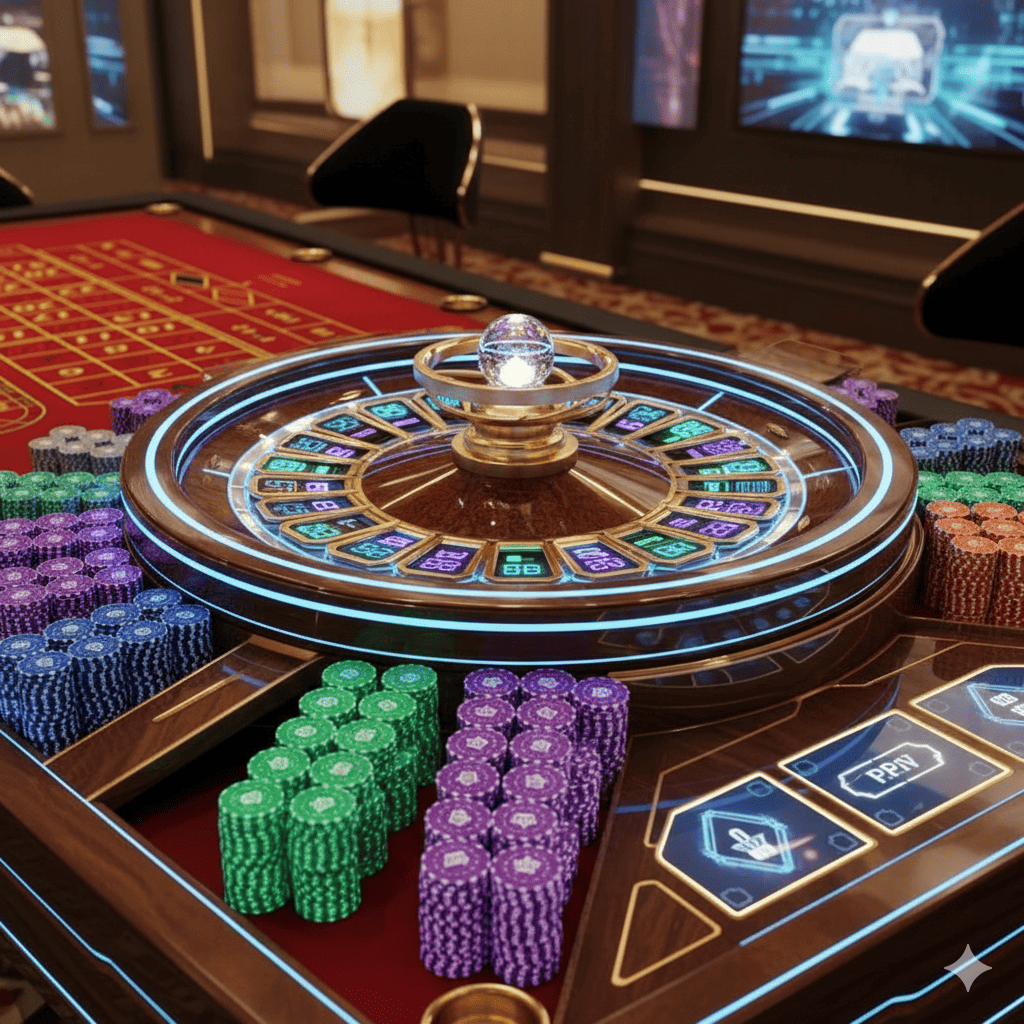
I remember the days when a “live casino” meant a webcam pointed at a tired blackjack dealer in a windowless room in Costa Rica. The lighting was harsh, the video was grainy, and the interaction was non-existent. It was functional, but it was devoid of soul. Today, when I walk onto one of our production sets, I am not stepping into a backroom; I am stepping onto a soundstage that rivals anything Disney or Netflix is building. We have moved beyond simple card games. We are in the era of cinematic game shows, a genre that blends the thrill of high-stakes gambling with the production value of a primetime television spectacle. As a representative of a major online casino operator, I have had a front-row seat to this metamorphosis. We are no longer just competing with other casinos for your attention. We are competing with Instagram, Fortnite, and HBO. To win that war, we had to stop being a utility and start being a showman.
The transformation has been absolute. We have traded green felt for green screens, and card shoes for complex, physics-based machinery integrated with real-time Augmented Reality. The modern live game show is a beast of engineering, art, and psychology. It requires a crew of hundreds, including directors, sound engineers, 3D animators, and game mathematicians, all working in perfect synchronization to deliver a seamless experience to a mobile phone screen halfway across the world. In this article, I am going to take you behind the velvet rope. I will explain how we build these worlds, the technology that powers the illusion, and why the future of gambling looks less like a casino and more like a blockbuster movie.
The Shift from Dealer to Performer
The first casualty of this revolution was the traditional croupier. In a game of Baccarat, the dealer is a mechanic. Their job is to deal cards efficiently, calculate totals, and remain stoic. Precision is the metric of success. In a Cinematic Game Show, precision is still required, but it is secondary to charisma. We are no longer hiring dealers; we are casting talent.
When we audition hosts for our major game show titles, we are not looking for card dexterity. We are looking for energy. Can they hold the attention of 10,000 concurrent players for an hour? Can they improvise when the big wheel stops on a multiplier? Can they interact with a computer-generated character that only they can see on a monitor? The training regimen has shifted from math drills to improv classes and ear-prompter training. These hosts are talking to a camera lens, but they must make every single player feel like they are the only person in the room.
The mental load on these performers is immense. They have a director shouting in their earpiece, a chat feed scrolling at light speed on a monitor, and complex game rules to manage, all while maintaining a high-energy persona. They are the human anchor in a sea of digital chaos. If the host fails, the illusion breaks. Therefore, the top hosts in our industry are becoming minor celebrities in their own right, with fan bases that follow them from shift to shift.
The Architecture of Illusion: Set Design and AR
If you walked into one of our old studios, you would see a table and a blue curtain. If you walk into a modern game show studio, you might think you have stumbled onto the set of a fantasy film. The physical sets are massive, intricate builds. We employ set designers who have worked on Eurovision and major theater productions.
However, the physical set is only the canvas. The paint is Augmented Reality (AR). We use the same tracking technology used in Hollywood blockbusters to overlay digital elements onto the live video feed. When you see a 3D bonus round character walk onto the stage and stand next to the host, that character is being rendered in real-time by a bank of servers running Unreal Engine.
The Challenge of Synchronization
The technical difficulty here cannot be overstated. The digital character must be perfectly anchored to the physical floor. If the camera moves (and our cameras are on cranes and jibs, constantly moving), the digital character must move in perfect perspective. Any lag, any “drift,” and the viewer instantly loses immersion.
We achieve this through a combination of infrared camera tracking and telemetry data from the camera lenses. The system knows the exact focal length, zoom level, and position of the physical camera in 3D space down to the millimeter. It feeds this data to the render engine, which generates the graphics from that exact perspective. This happens sixty times a second. The result is a seamless blend of the real and the unreal. The host can gesture to a virtual castle, and on your screen, the lighting matches, the shadows fall correctly, and the physics feel weighty.
The Narrative Arc: Gambling as a Story
Traditional gambling is cyclical and fast. Spin, result, repeat. Cinematic game shows introduce a narrative arc. They are designed to take the player on a journey. The base game (usually a money wheel) is merely the waiting room. The true destination is the Bonus Round.
This structure mimics the dramatic structure of a film.
- The Setup (Base Game): The tension builds. The wheel spins. Players are hoping not just for a cash win, but for the “key” to the next level.
- The Inciting Incident (Bonus Trigger): The flapper stops on the “Bonus” segment. The lights change. The music shifts. The studio transforms.
- The Journey (The Bonus Game): The camera flies through a digital portal. The player is transported to a completely new environment-a candy factory, a haunted house, a city of gold.
- The Climax: The high-multiplier decision. The ball drops, or the chest opens.
- The Resolution: The win is counted, the dopamine hits, and we return to the studio to do it all over again.
By gamifying the experience with these distinct phases, we extend the “Time on Device.” Players aren’t just betting on a number; they are betting on the chance to see the show. They want to witness the spectacle of the bonus round. Even players who haven’t bet on the bonus will stay watching, just to see the visual payoff. It is gambling as a spectator sport.
The Audio Landscape: Scoring the Win
In a silent film, you can forgive bad lighting. In a modern production, bad audio is unforgivable. We have moved far beyond the generic “ding-ding-ding” of slot machines. Our game shows feature bespoke musical scores composed by professional musicians.
The audio is dynamic. The software that runs the game engine communicates with the audio engine. As the wheel slows down, the music changes tempo. It syncs with the heartbeat of the game. If a multiplier hits, a specific crescendo plays.
We use spatial audio techniques to immerse the player. If a virtual train rushes past the host on the left side of the screen, you hear it in your left earbud. The voice of the host is mixed perfectly above the soundtrack, processed with broadcast-grade compression to sound rich and authoritative. We understand that audio is the primary driver of emotion. The visuals tell you what is happening, but the sound tells you how to feel about it.
Lighting: Painting with Photons
Lighting a live game show is a nightmare for a director of photography. You have a human host who needs to look flattering. You have physical props (like a giant wheel) that are reflective and prone to glare. You have green screens that must be lit perfectly evenly to allow for keying. And you have to do this while the camera is moving 360 degrees.
We use intelligent, DMX-controlled lighting rigs. The lights are programmed to react to the game state. When the wheel spins, the studio lights pulse in time. When a bonus hits, the entire color temperature of the room shifts from a warm gold to an exciting neon blue or urgent red.
This is not just for show; it is for clarity. The lighting cues the player. Even with the sound off, the visual language of the light tells the player what phase of the game they are in. It creates a subconscious rhythm. Strobe effects are used sparingly but effectively to heighten the climax of a win. We are essentially running a live concert light show, 24 hours a day, 7 days a week.
The Technology of Fairness in a Virtual World
One of the biggest hurdles we face with cinematic game shows is trust. With a deck of cards, you can see the cards. With a physical wheel, you can see gravity at work. But when we introduce Computer Generated Images (CGI) and digital bonus rounds, how does the player know it is not rigged?
This is where the marriage of physics and RNG (Random Number Generator) becomes critical. In many of our bonus rounds, the outcome is determined by a physical machine-a ball drop, a puck drop, or a mechanical shaker. We prioritize physical RNG wherever possible because players trust gravity.
However, when we must use digital RNG (for example, a virtual coin flip), we have to be transparent. The certification process for these games is rigorous. Auditors inspect the code to ensure that the visual representation on the screen matches the mathematical outcome determined by the server instantly. If the server says “100x multiplier,” the animation must show exactly that, with no “near misses” programmed to deceive the player. The cinematic flair must never obscure the mathematical truth.
Behind the Curtain: The Control Room
If you think the studio is chaotic, you should see the control room (the Gallery). This is the brain of the operation. It looks like NASA mission control.
You have the Producer, who is watching the game flow and ensuring the host is on track.
You have the Technical Director, switching between the 15 different camera angles in real-time to capture the best action.
You have the Sound Engineer, balancing the host’s mic against the game effects.
You have the Game Integrity Officer, staring at data logs to ensure the wheel is spinning at the correct speed and the sensors are reading the result correctly.
There is also a team of Chat Moderators. In a popular game show, the chat moves so fast it is a blur. These moderators are filtering out abuse, answering questions, and feeding good talking points to the host via a screen. It is a high-pressure environment where a single technical glitch can cost the casino hundreds of thousands of dollars in refunded bets and, more importantly, loss of reputation.
The Challenge of Latency
The enemy of cinematic production is latency. We are broadcasting high-definition video, mixing in AR graphics, processing thousands of bets per second, and distributing this stream to players in London, Tokyo, and Toronto simultaneously.
If the video lags behind the data, the player sees the result on their balance before they see it on the screen. This destroys the suspense. We invest heavily in ultra-low latency content delivery networks (CDNs). We are constantly fighting to shave milliseconds off the transmission time.
We use adaptive bitrate streaming to ensure that even if a player has a poor connection, they get a smooth audio and gameplay stream, even if the video quality has to dip momentarily. The synchronization of the video stream (the show) and the data stream (the bet result) is the holy grail of our engineering teams.
The Evolution of IP and Branding
Recently, we have seen a shift toward branded content. We are not just creating generic “Wheel Games.” We are licensing intellectual property (IP) from the world of movies, board games, and TV.
This adds a layer of complexity. Working with a brand like Monopoly or a Hollywood studio means we have to adhere to their strict brand guidelines. The 3D model of the character must be approved by the IP holder. The script must match the tone of the original property.
This collaboration elevates the genre. It brings instant recognition. A player scrolling through a lobby might stop when they see a familiar character. It validates the game show as premium entertainment. It is no longer just “gambling”; it is an extension of a franchise they already love.
The Future: VR and the Metaverse
Where do we go from here? The screen is the limit. The next logical step is to step through the screen. We are actively prototyping Virtual Reality (VR) versions of our game shows.
Imagine putting on a headset and standing inside the studio. You can look to your left and see the host. You can look down and see your chips. You can look to your right and see the avatars of other players.
This moves the experience from “Interactive TV” to “Social Presence.” In a VR game show, you could physically reach out and spin a mini-wheel. You could high-five another player when you both win. The technology is still maturing-headsets are heavy, and not everyone has one-but we are building the assets now so that when the hardware catches up, we are ready.
We are also exploring “Dual Mode” productions, where the host interacts with both camera-based players and VR-based avatars simultaneously. This hybrid model is likely the bridge to the Metaverse casino.
Interactive Decision Making
One of the most powerful features of modern game shows is the “collective choice” mechanic. In older games, the result happened to you. In cinematic games, we ask you to participate.
“Blue door, Green door, or Red door?”
Thousands of players make a choice on their screens. The host sees the percentages. “Wow, 60% of you are going for the Red door!” Then the door opens.
This agency is crucial. If you pick the wrong door and lose, you don’t blame the casino; you blame your choice. If you pick the right door and win big, you feel like a genius. This psychological shift from passive observer to active participant creates a much deeper emotional bond with the game. It turns the gambling session into a strategy session.
Conclusion: The Entertainment Convergence
The line between a video game, a casino game, and a TV show has been erased. We are operating in the gray area between all three. We are borrowing the visual language of Hollywood, the interactivity of Silicon Valley, and the adrenaline of Las Vegas.
As a representative of this industry, I can tell you that we are just getting started. The computing power available to us is doubling every few years. The 5G networks are opening up bandwidth for 4K streaming. The engines that drive our graphics are becoming photorealistic.
The “Casino” of the future will not be a grid of thumbnails. It will be a portal to a world of entertainment. You won’t just log in to bet; you will log in to watch, to interact, to be dazzled. The bets are just the price of admission to the show. And what a show it is going to be.